Posts

Showing posts with the label Benefits

Carrot Nutrition Facts: Pros And Cons
Image
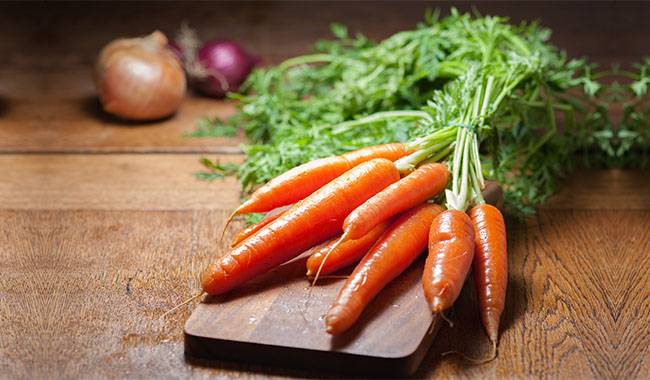
  Carrot Nutrition Facts Pros And Cons   It is not without reason that the famous Renaissance physician and chemist Theophrastus Paracelsus called carrot root Mandragora (genus), making people live longer without diseases. The amazing properties of carrots lie in their carrot nutrition facts, which include various trace elements and a wealth of vitamins, some of which the human body cannot form during the metabolic process. The root of the carrot concentrates substances that help treat many diseases, obtain a strong immune system and rejuvenate the entire body. Read more about the useful properties of carrots, their biochemical composition, and the influence of growing conditions on the value of the root crop in this material. A FEW FACTS ABOUT CARROTS Cultured carrots evolved from the wild carrots that grew in abundance in Asia and Europe. This root vegetable is thought to have originated in Afghanistan. Carrots originated in Afghanistan and possibly northern Iran and Pakist...

The purpose for uses of sawdust in gardens

Image
  The purpose for uses of sawdust in gardens In the home, especially during construction work, sawdust waste from carpentry projects accumulates. Some young owners don't realize how valuable the gardening materials they have on hand are and immediately send the waste into the fire and then scatter the ashes around the garden as fertilizer. Indeed, where can you use sawdust, how can you use them, and is it worth a try? I hasten to reassure the reader. There are many ways to use sawdust in gardening. But you must use sawdust correctly. Let's try to figure out where and how to Uses of sawdust . WHAT IS SAWDUST? Sawdust is the waste material from sawing wood and other materials (plywood, boards, etc.). Sawdust material is quite light. The bulk density of sawdust is 220 Lb (100 kg) per 1 cubic meter, and 1 ton contains 9-10 cubic meters of raw material with a standard moisture content of 8-15% (Table 1). This material is very easy to handle. Table 1. Bulk density of sawdust wood Bul...

Arugula: The delicious dish by planting your own

Image
  Arugula The delicious dish by planting your own A delicious California delicacy leafy salad arugula is beginning to take a firm foothold among other vegetable salad crops. It was unknown to California cuisine for a long time. If in first-century Italy, arugula was considered an indispensable vegetable on the table as a spice. In California it was an annoying weed lump until the 20th-21st centuries, when it began to occupy a valuable place on our region's kitchen menus as a salad plant. Today, in California, the "Italian recipe" is appreciated as a food crop. It does not require special care and grows freely in places with a rather harsh climate. Arugula can be grown in the following places. 1. In open spaces by sowing and germination 2. In greenhouses by direct sowing from seed and by the nursery. 3. On the kitchen windowsill at home. Dear reader, to get acquainted with the method of growing arugula , its characteristics, and varieties, suitable for growing in greenhou...

How I made a narrow garden bed and simplified my life

Image
  How I made a narrow garden bed and simplified my life The most difficult work in the "garden field" is laying out of the site. Breaking it down into beds, and digging it up in the fall. Loosening the soil, planting, tending, and even watering (although this is not an easy task for older people) is less scary for the gardener because these tasks are more time-consuming and can at least get a short break in the warmer months. So, how do you organize your summer cottage with plots to keep it attractive, keep the vegetable garden clean, and reduce caregiving? I suggest making a Narrow Garden Bed. In this material, I will tell you how Narrow Garden Beds save a lot of labor for large estate owners and share the experience of creating them. WHY BIG GARDENS DON'T EQUAL BIG HARVESTS Years of gardening experience have shown that the quantity of quality harvest is not provided by a large area. Plants can be more carefully cared for in smaller areas, which means that bushes and e...

What is Thyme (Thymus mongolicus Ronn)

Image
  Thyme(Thymus mongolicus Ronn) Thyme (Thymus mongolicus Ronn), semi-shrub, oval leaves, head-shaped inflorescence, tubular bell-shaped or narrowly-bell-shaped calyx, corolla purplish red, purple or lavender, pink, flowering from July to August, small nuts nearly round Shaped or oval. It can be used as an ingredient. It is commonly used as a spice in European cooking. It has a spicy taste and is used to add to stews, eggs, or soups. Traditionally in Europe, thyme is considered a symbol of courage, so in the Middle Ages, it was often used as a gift to the enlisted knight. In the Yuan Dynasty of China, there was a book called "Complete Collection of Things to Use at Home", which remembers that it was seasoned with thyme and camel hooves. The famous Chinese medical scientist Li Shizhen’s "Compendium of Materia Medica" records: "The taste is slightly pungent, and the natives cook lamb to eat, which is delicious." Thyme is native to Southern Europe and is wide...