Posts

Showing posts with the label Seedlings

How to Growing Broccoli, Planting and Harvesting Broccoli

Image
  How to growing broccoli, planting and harvesting broccoli Broccoli is one of several vegetables in the Brassica oleracea of the Brassicaceae (or mustard family). broccoli is one of several varieties of vegetables in the genus kale. It is an annual plant that growing broccoli from seed. In fact, it is a variant of the cabbage that we all know, a crop that belongs to the cabbage family and has unopened inflorescences instead of having leaves like other members of the subspecies. Not everyone knows that it is genetically the closest to Broccoli, or more precisely. Broccoli is simply a descendant of Cauliflower, which is younger than the latter. Broccoli was acquired by simple selection around the fifth or sixth century B.C. Of course, no one even knew about such a concept as breeding at that time. For a long time, centuries, in fact, Broccoli was only grown in what is now Italy. broccoli means germination in Italian, and anyone who has seen Broccoli will immediately understand why ...
7 Tips on How to Grow Strong & Healthy Seedlings

Image
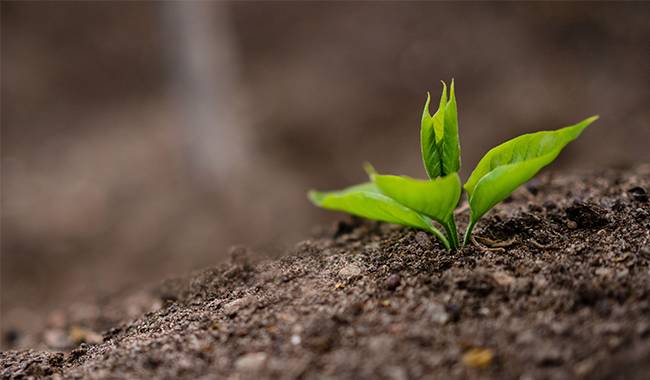
  7 Tips on How to Grow Strong & Healthy Seedlings Successful cultivation of healthy seedlings requires correct agricultural techniques. If the work is carried out qualitatively and meets the requirements of sowing technology and care, then seedling raising is not a difficult process, and the planting material is planted in an absolutely healthy and permanent place. However, there are cases when healthy, friendly seedlings begin to wilt, and after 1-3 days, the seedlings die completely. The cause may be non-infectious plant damage related to violation of agronomic requirements of cultivation conditions (insufficient light, low temperature, high humidity, over-fertilization, etc.), so that weak seedlings affected by soil infection in the form of fungal and bacterial diseases blackleg, rot and other forms. This article is devoted to how to avoid seedling diseases caused by cultivation errors and how to overcome blackleg and other infections. SIMPLE RULES FOR RAISING HEALTHY SEED...

The growing secret of protecting seedlings

Image
  The growing secret of protecting seedlings Planting seedlings is a pleasant but not easy job. For various reasons, seedlings can pull out, turn yellow or develop diseases. And each stage of growth needs to meet its own specific conditions. The following considers the main problems faced by gardeners when using the seedling method and protecting seedlings for growing plants , as well as methods and tools to help prevent or eliminate these problems. THE MAIN PROBLEMS WITH SEEDLINGS The most common difficulties that await gardeners when planting protecting seedlings are the following. 1. low germination rate. 2. Pulling seedlings to grow. 3. drying out. 4. Falling over. 5. yellowing. 6. Burning. 7. slow growth or stunting. 8. appearance of pests and diseases. WHAT TO PAY ATTENTION TO WHEN PLANTING SEEDLINGS The above problems are closely related to the agronomic techniques used to grow protecting seedlings. Whether growing vegetable crops, flowers, or berries from seeds, there are ...

Before planting, how to Revive a Dead Plant

Image
Before planting, how to Revive a Dead Plant We recommend buying saplings only from specialized nurseries. Even better, from those that have been operating in your town or regional center for several years and have a good reputation. Also, try to buy saplings that are zoned in your area and approved for local use. But what about the situation where you buy a seemingly healthy seedling from a seller you don't know well and upon closer inspection, at home, you find that it is not so healthy? Can there be many seedlings that are not as healthy as they should be brought back to life? Is it possible? We will tell you that before planting, how to Revive a Dead Plant here . HOW TO CHOOSE AND WHERE TO BUY SEEDLINGS? Ideally, you should buy seedlings with a closed root system. They have the advantage that they can be grown all year round (in large sizes - even in winter) and in most cases, they are well developed: after all, they are not dug up for sale, they grow on their own, all the time ...