Posts

Showing posts with the label Pests

How to Prevent Eggplant Pests and Diseases
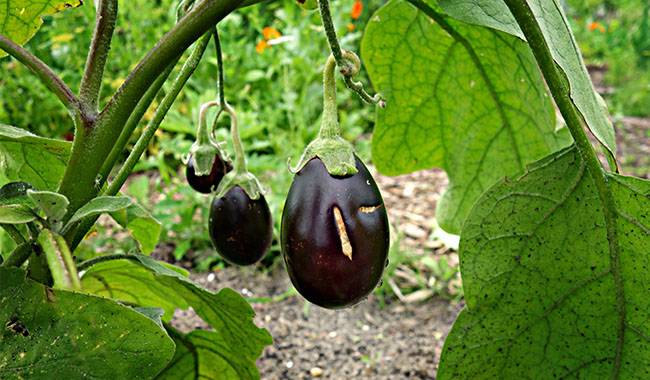
Image
  How To Prevent Eggplant Pests And Diseases Eggplants, like other vegetable crops , are susceptible to pests and diseases. By following all the recommendations for outdoor cultivation, you can minimize the number of treatments for eggplant pests and diseases. And by using biological protection on private farms, you can get eco-friendly products. AGRONOMIC MEASURES TO PROTECT EGGPLANT FROM DISEASES The main measure to reduce the intensity of fungal disease infestation of eggplant is the spatial isolation of cultures, i.e., cultivation in crop rotations and return to the same location no earlier than 3-5 years. Eggplant should be placed only in the recommended predecessors: beans, melons, carrots, cucumbers, onions, early cabbage, etc. Plant only healthy eggplant seedlings with no signs of pests or diseases. Avoid overgrowing plants and excessive fertilization, especially with nitrogen. Plant and sow only approved eggplant varieties, preferably not resistant to a single disease, bu...
6 Of The Most Dangerous Garden Pests

Image
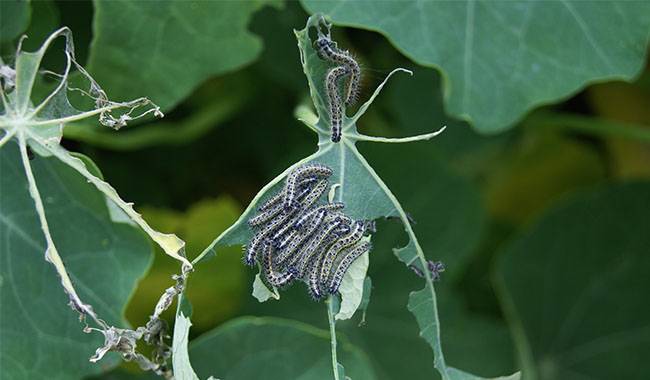
  6 Of The Most Dangerous Garden Pests   In nature, there is always a struggle for space and food. In this struggle, there are no winners. A biological equilibrium is established, where a beneficial fauna suppresses the reproduction rate of pests. And this pest, usually a polyphagous representative of the animal kingdom, can destroy large vegetable , grain, and fruit crops in a single day. On arable land, the real owners of gardens and orchards control this pest by their own methods. Here we present to you six of the most dangerous garden pests and how to deal with them. I. THE SPIDER MITE IS A COSMOPOLITAN AND OMNIVOROUS PEST Among these Acari, the most common and best known is the Spider mite (Tetranychidae). Out of about 50,000 species, more than 1250 species occur worldwide, including Antarctica. Spider mites are tiny spider-like creatures. Males are 0.3-0.6 mm, and females up to 1.0 mm. The body of Spider mite is round and covered with tiny bristles and sometimes tiny wa...

Garden care: How to control the Delia Antiqua(onion fly)

Image
  Garden care How to control the Delia Antiqua(onion fly)   This fly (Delia Antiqua) is called onion fly or onion maggot because it most often infests onion plants, but it will sometimes attack garlic and even bulb flowers. Signs of the onion or leek fly can usually be seen with the naked eye. If the onions on your garden suddenly grow slowly, if their leaf plumes begin to turn yellow, wilt, and dry, and if the onions give off an odor that is completely unlike onions, then it is definitely infested with Delia Antiqua (Onion fly) . If you dig up the affected plant onion bulbs, you can see patches that resemble decay and later the onions become so soft that they can neither be stored nor eaten. WHAT DOES DELIA ANTIQUA (ONION FLY) LOOK LIKE? This insect really looks like a small fly and is light gray in color. The fly is about 0.4inch (1cm) long and can be distinguished from males by the dark stripe on its abdomen: only males have this stripe. Female Delia Antiqua (Onion fly) ar...

How to blackcurrant bush care in spring

Image
  How to blackcurrant bush care in spring It's springtime in the garden, berry, and vegetable gardens. Today we will discuss blackcurrant . What kind of care does this berry need during the spring? It must be said that the treatment of berries in spring is more important than in autumn. If there is still snow and some work cannot be done, the order of work can be changed. For example, carry out spring cleaning of blackcurrant from debris accumulated during autumn and winter. Do not carry out formative pruning and carry out blackcurrant bush care if it was carried out in the autumn. But let's try to consider all the work in order Spring care for blackcurrant includes these urgent tasks. CLEANING BLACKCURRANT BUSHES The main cleaning of old branches, fallen leaves, and weeds in blackcurrant bushes is done in the fall. However, during the fall and winter, debris builds up and must be removed. Carefully rake out the overwintered old leaves in the blackcurrant bushes and between th...

The measures for cecidophyopsis ribis on currants

Image
  The measures for cecidophyopsis ribis on currants Blackcurrant grows and bears fruit on every garden plot. Its beneficial properties are undeniable. But like other garden crops, it is susceptible to a variety of pests, including Cecidophyopsis ribs. the following article describes different methods and control measures to protect the berries from pest attacks. WHAT IS CECIDOPHYOPSIS RIBIS? Cecidophyopsis ribis refers to the four-legged Cecidophyopsis ribis. it is often referred to as blackcurrant gall mite or big bud mite. they are extremely difficult to see because of their tiny size. Adult female Cecidophyopsis ribis have an external size of 0.2 mm, and male Cecidophyopsis ribis are even smaller. The body of Cecidophyopsis ribis is white, worm-like, elongated, and rounded, with four legs. The legs are made up of segments, hence the name arthropod. cecidophyopsis ribis suck the sap from plants with their stinging, sucking mouthparts that lead them to their death. THE DEVELOPME...