Posts

Showing posts with the label garden

The 20 Homemade Fertilizer For Indoor Plants

Image
  The 20 Homemade Fertilizers For Indoor Plants   Houseplants need fertilizer at every stage of their development. A lack of nutrients will harm flowering and growth as well as the appearance of the plant. If you wish, you can find a wide variety of composts in flower stores. But you can also prepare your own high-quality fertilizer with the materials you have on hand - in this article. You will learn to make your own homemade fertilizer for indoor plants ! FERTILIZING YOUR INDOOR FLOWERS Early fertilization of potted plants is essential for proper development, good growth, and lush blooms. The whole problem is that potting soil contains only a supply of certain nutrients, and these nutrients are further depleted over time. If you don't give your plants enough nutrients at least twice a month, they will starve to death after a while. This will inevitably lead to a decline in ornamental value. You can make your own nutrient mixture in your own kitchen. You can make it from al...
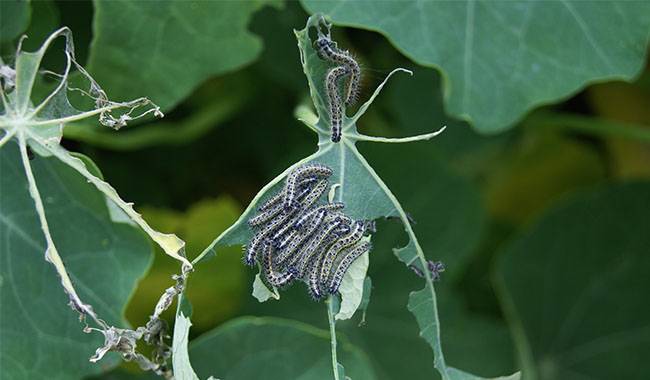
6 Of The Most Dangerous Garden Pests

Image
  6 Of The Most Dangerous Garden Pests   In nature, there is always a struggle for space and food. In this struggle, there are no winners. A biological equilibrium is established, where a beneficial fauna suppresses the reproduction rate of pests. And this pest, usually a polyphagous representative of the animal kingdom, can destroy large vegetable , grain, and fruit crops in a single day. On arable land, the real owners of gardens and orchards control this pest by their own methods. Here we present to you six of the most dangerous garden pests and how to deal with them. I. THE SPIDER MITE IS A COSMOPOLITAN AND OMNIVOROUS PEST Among these Acari, the most common and best known is the Spider mite (Tetranychidae). Out of about 50,000 species, more than 1250 species occur worldwide, including Antarctica. Spider mites are tiny spider-like creatures. Males are 0.3-0.6 mm, and females up to 1.0 mm. The body of Spider mite is round and covered with tiny bristles and sometimes tiny wa...

Garden care: How to control the Delia Antiqua(onion fly)

Image
  Garden care How to control the Delia Antiqua(onion fly)   This fly (Delia Antiqua) is called onion fly or onion maggot because it most often infests onion plants, but it will sometimes attack garlic and even bulb flowers. Signs of the onion or leek fly can usually be seen with the naked eye. If the onions on your garden suddenly grow slowly, if their leaf plumes begin to turn yellow, wilt, and dry, and if the onions give off an odor that is completely unlike onions, then it is definitely infested with Delia Antiqua (Onion fly) . If you dig up the affected plant onion bulbs, you can see patches that resemble decay and later the onions become so soft that they can neither be stored nor eaten. WHAT DOES DELIA ANTIQUA (ONION FLY) LOOK LIKE? This insect really looks like a small fly and is light gray in color. The fly is about 0.4inch (1cm) long and can be distinguished from males by the dark stripe on its abdomen: only males have this stripe. Female Delia Antiqua (Onion fly) ar...

How To Care For Raspberry Bushes In Fall

Image
  How to care for raspberry bushes in fall Whatever one may say, but autumn is on the doorstep, a month or two will pass and it will be possible to slip on the first frozen puddle. So why not start preparing our favorite plants, which gave us the harvest in the summer, for the real winter? Today, we will try to tell you in as much detail as possible about preparing raspberries for winter. More Related Information About Growing Raspberry Plants THE TWO FALL CARE PERIODS FOR RASPBERRY BUSHES In general, the autumn period, in any case, in relation to raspberries, can be strictly divided into two periods early and late. The first period, the early period is the end of August, when the weather is still quite warm. It begins immediately after the raspberries are harvested and have stopped growing, and although the wood can still show some growth activity, it is already in full swing for maturity to survive the cold winter. The second period, which begins when the first leaves fall, lasts...

Appletree care schedule for each month

Image
  Appletree care schedule for each month Apple trees are probably the most common fruit crop. Practically every yard had one or several apple trees. Thus, they are self-sustaining, with a crop, and the gardener is sometimes satisfied with everything when suddenly he notices that his neighbor has the exact same variety on the same soil, of comparable age, but with a much larger yield. The gardener began to study the reason and discovered that there was a special calendar, simply a list of basic tips for appletree care by month , which specifies what to do when. APPLETREE CARE IN JANUARY In January, when the trees are dormant, the first thing you can do in this cold month is to take out the rootstock of your apple tree from the basement, from the dug-up branches, for winter grafting. It is also known as tabletop grafting or convenience grafting: sitting by yourself in a cozy room, preparing the seedlings. What can be unfortunate in the garden in January? Of course, it is the wet sno...