Posts

Showing posts with the label Flower bed

How to grow lavender growth patterns and care, harvesting

Image
  How to plant lavender   Lavender is a completely unique ornamental and medicinal plant that won endless love two thousand years ago for its delightful spicy aroma. Its traditional purple or violet fluffy beauty and outstanding culinary qualities. This article gives you an explanation of how to plant lavender, care and harvest . Currently, lavender is widely used for borders and ridges, where it is advantageous to place it in pots and essential as a background plant. In addition, experienced gardeners will confirm that the smell of lavender is offensive to Colorado potato beetles and moths. For this reason, it is important to place the plant not only in the flower bed but also in the garden. In recent years, many flower growers have added lavender to their summer cottages and private residential areas. It's no surprise the delicate lavender flowers and fragrance in the garden are stunning. You can find more information on growing crops from seedlings below, as well as a phot...

How to plant chrysanthemum: planting, growing, and care

Image
How to plant chrysanthemum planting, growing, and care   There are many questions from friends: How to plant chrysanthemums ? Why do chrysanthemums become lighter? How to cover the chrysanthemums with a blanket in winter? When and why should I bury chrysanthemums in a ditch? Read about it in our article. The chrysanthemum is deservedly called the queen of autumn - because it blooms luxuriously until frost. But not every queen can boast of such resistance and character! The hardiest specimens can even bloom until mid-December, and if you move the flowering shrubs into pots in time, you have every chance of enjoying the chrysanthemum's blooms until Christmas! Chrysanthemums are also considered to be an ideal cut flower. If properly cared for, chrysanthemum bouquets can stay fresh for a full month. Chrysanthemums can easily handle long trips. It requires little care and is cold and drought tolerant. It seems that this flower is definitely self-sufficient. But some subtle care methods...

Why do you need Deadhead flowers and Guiding

Image
  Floral Scissors and Flowers WHY DO YOU NEED THE DEADHEAD FLOWERS The key goal of plants is to reproduce. Although we feel that flowers are a reward for taking care of plants, plants themselves also play a key role in future generations. The seeds produced by plants carry genetic material that enables plants to produce new offspring from spring to autumn. Therefore, once plants have bloomed petals for the first round of successful pollination, they will gradually concentrate resources to develop seeds. Regardless of whether it is an annual or a perennial plant, it will focus on producing seeds to ensure the survival of its species. If your beautiful plant blooms the first round of gorgeous petals and succeeds in pollination, it will immediately transfer energy and resources to developing these seeds. This is the most obvious relative to food crops. "Deadhead" and "Pinch" are very similar professional terms. Some people will exchange it. Others have made a technical...

How to take care of baby's breath? Planting for tips

Image
  How to take care of baby's breath Planting for tips There is no need to think carefully about how to take care of baby's breath , which is very resistant to the vagaries of nature. To make the plant please you with rich flower colors, just water it properly and don't forget to fertilize it. THE MAIN DIFFERENCES IN BABY'S BREATH CARE 1.Attitude to soil Baby's Breath (Gypsophila) is a culture that does not require much fertile soil, as can be seen from the name of the plant itself, whose main characteristic is that the soil should be rich in calcium. If the soil is acidic, then lime sprinkling is carried out - adding slaked lime, dolomite powder, chalk, gypsum, or wood ash. 2.Relationship with water The site of Baby's Breath (Gypsophila) should have dry, loose, and permeable soil. The plant does not like stagnant moisture and confined groundwater, and the roots and stems may rot. Frequent watering is required during the early growth of young shoots, especially ...

The 5 misunderstanding of balsam plant care

Image
  The 5 misunderstanding of balsam plant care Balsam flowers are one of the oldest and ever-popular houseplants, and not by accident are considered easy to grow. According to popular rumor, if popular opinion is to be believed, indoor Balsam flowers are unpretentious and hardy enough to suffer only from serious lapses in care. Seedlings can grow under its power. However, it would be a mistake to think that this is a mere human being. There are basic requirements for balsam plant care , and it is best not to deviate from them. After all, serious failures in watering, feeding, and pruning can be disastrous for this plant. Balsam flowers - a member of the Impatiens balsamina family - is a small perennial herb that is prone to rapid deterioration. For this reason, it is often grown as an annual. balsam flower trees are fast-growing, widely distributed, shed their lower leaves, require no control, and easily grow to 23inch (60cm). Balsam flowers fragrance is its main "trump card"...

How I made a narrow garden bed and simplified my life

Image
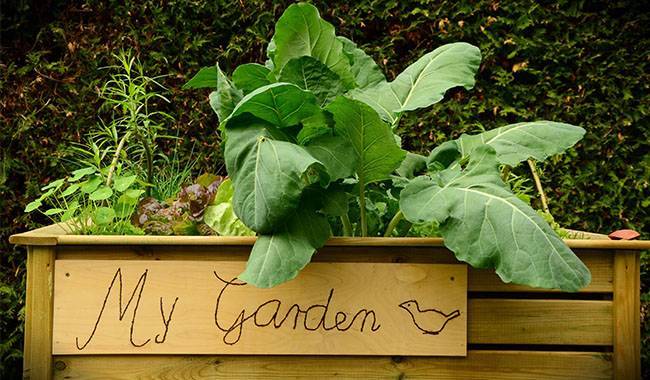
  How I made a narrow garden bed and simplified my life The most difficult work in the "garden field" is laying out of the site. Breaking it down into beds, and digging it up in the fall. Loosening the soil, planting, tending, and even watering (although this is not an easy task for older people) is less scary for the gardener because these tasks are more time-consuming and can at least get a short break in the warmer months. So, how do you organize your summer cottage with plots to keep it attractive, keep the vegetable garden clean, and reduce caregiving? I suggest making a Narrow Garden Bed. In this material, I will tell you how Narrow Garden Beds save a lot of labor for large estate owners and share the experience of creating them. WHY BIG GARDENS DON'T EQUAL BIG HARVESTS Years of gardening experience have shown that the quantity of quality harvest is not provided by a large area. Plants can be more carefully cared for in smaller areas, which means that bushes and e...

Growing Balsam flowers: the secret to more lushness

Image
  Growing balsam flowers the secret to more lushness Many people like to decorate their windowsills, yards, and garden plots with ornamental flowers in clusters of large, bright flowers. One of these flowers is Balsam flowers (Impatiens balsamina). About how growing balsam flowers from seeds , as well as its species, how it is used in landscape design - this is what we will talk about in this article. Balsam flowers , which is also known as Impatiens balsamina or perennial, from the family Impatiens balsamina - it is an annual or perennial herb (garden or room flower), which counts in their genus more than 500 species. Balsam flower leaves are fleshy, entire, glossy, with serrated edges and glandular at the base. The leaves are green, reddish-green, or bronze in color. The succulent and branched buds of different varieties of Balsam flowers range in height from 6-20inch (15-50 cm). The flowers are zygomorphic and grow singly or in inflorescences. Each flower is in a leaf axil and c...